Key Facts
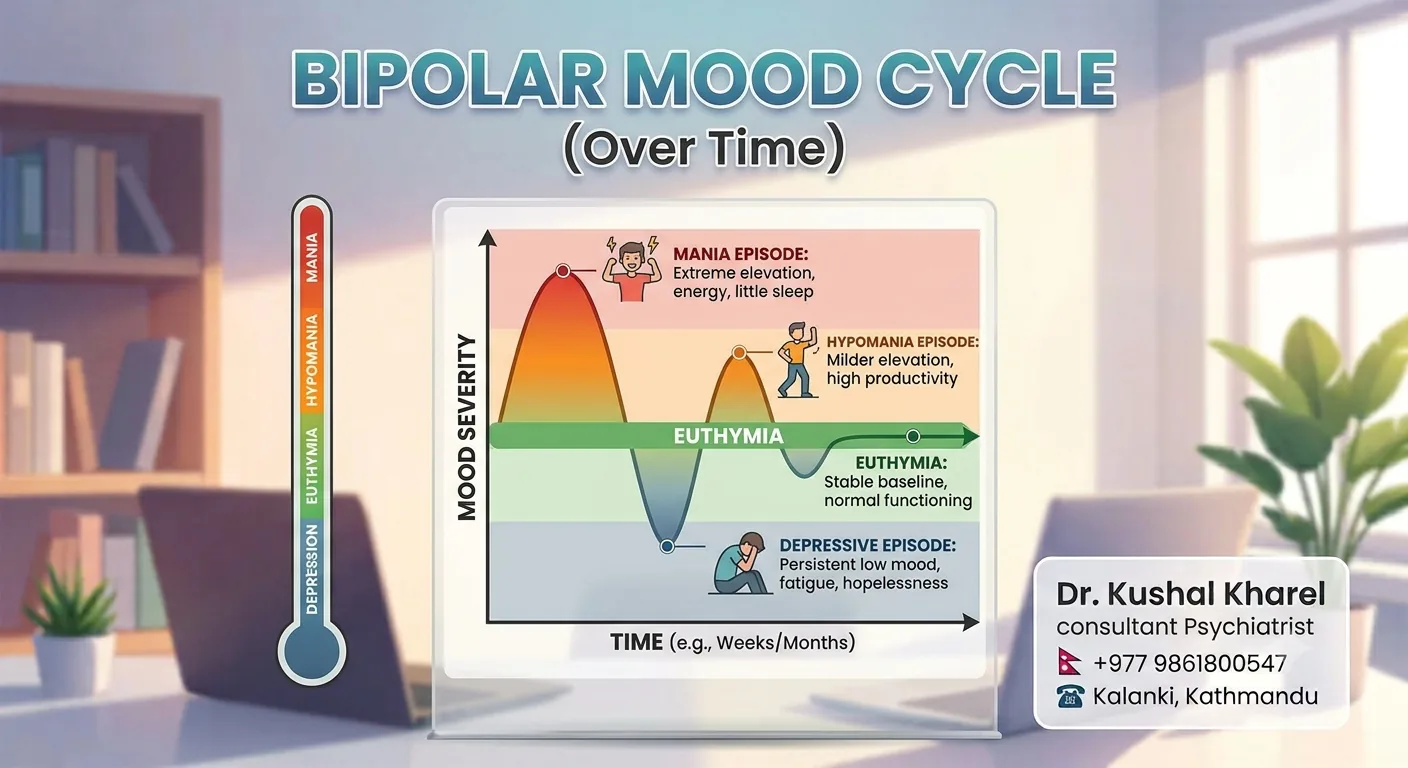
Bipolar I Disorder is defined by the occurrence of at least one manic episode: a distinct period of abnormally elevated, expansive, or irritable mood combined with a marked increase in energy and activity, severe enough to cause significant impairment, require hospitalization, or involve psychotic features. While most people with Bipolar I also experience major depressive episodes over their lifetime, depression is not required for the diagnosis — a single manic episode is sufficient. Between episodes, many people return to their usual level of functioning, though the illness carries a substantial risk of relapse and, notably, one of the highest suicide...
Common symptoms
- Manic episode: elevated, expansive, or irritable mood with high energy
- Inflated self-esteem or grandiosity
- Decreased need for sleep (e.g., feeling rested after only 3 hours)
- More talkative than usual, or pressured speech
Key risk factors
- Family history of bipolar disorder (the strongest known risk factor)
- History of postpartum psychosis
- Significant sleep deprivation
Do I have bipolar disorder?
Take a free, confidential self-rated screening for bipolar i disorder.
Downloadable resources
What is Bipolar I Disorder?
Bipolar I Disorder is defined by the occurrence of at least one manic episode: a distinct period of abnormally elevated, expansive, or irritable mood combined with a marked increase in energy and activity, severe enough to cause significant impairment, require hospitalization, or involve psychotic features. While most people with Bipolar I also experience major depressive episodes over their lifetime, depression is not required for the diagnosis — a single manic episode is sufficient. Between episodes, many people return to their usual level of functioning, though the illness carries a substantial risk of relapse and, notably, one of the highest suicide risks of any psychiatric condition.
Definition
Bipolar I Disorder requires at least one manic episode: a distinct period lasting at least one week (or any duration if hospitalization is required) of abnormally and persistently elevated, expansive, or irritable mood and increased goal-directed activity or energy, accompanied by three or more (four if the mood is only irritable) characteristic symptoms, causing marked impairment in functioning, necessitating hospitalization, or including psychotic features.
What causes Bipolar I Disorder?
Bipolar I Disorder has one of the strongest genetic contributions among major psychiatric conditions, with heritability estimated at 60–80%. It is thought to arise from dysregulation of dopamine signaling (particularly during manic episodes) and disruption of the brain's circadian rhythm regulation. According to the 'kindling' model, episodes can become more frequent and increasingly spontaneous (requiring less external trigger) over time if the illness goes untreated, which is part of why early, sustained treatment matters.
What are the risk factors for Bipolar I Disorder?
- Family history of bipolar disorder (the strongest known risk factor)
- History of postpartum psychosis
- Significant sleep deprivation
- Stimulant or other substance use
- Antidepressant use without a mood stabilizer, which can trigger a manic episode
- High-stress or highly stimulating life events
- Seasonal patterns in some individuals
What happens in the brain with Bipolar I Disorder?
Manic episodes are associated with dopaminergic hyperactivity, which underlies the effectiveness of antipsychotic medications in acute treatment. Structural and functional imaging studies show abnormalities in the connectivity between the prefrontal cortex (responsible for emotional regulation and judgment) and limbic structures like the amygdala, impairing the brain's ability to regulate mood swings. Genetic research has also implicated circadian rhythm genes (such as CLOCK), consistent with the central role sleep disruption plays in triggering episodes.
What are the symptoms of Bipolar I Disorder?
- Manic episode: elevated, expansive, or irritable mood with high energy
- Inflated self-esteem or grandiosity
- Decreased need for sleep (e.g., feeling rested after only 3 hours)
- More talkative than usual, or pressured speech
- Racing thoughts or flight of ideas
- Distractibility
- Increased goal-directed activity or psychomotor agitation
- Excessive involvement in risky activities (spending sprees, impulsive sexual behavior, risky investments)
- Depressive episodes (in most patients over their lifetime), resembling Major Depressive Disorder
- Psychotic features (delusions or hallucinations) possible during severe mania or depression
How is Bipolar I Disorder diagnosed?
- At least one manic episode: elevated/expansive/irritable mood plus increased energy/activity lasting 1 week or more (or any duration if hospitalization is required)
- Three or more characteristic symptoms (four if mood is irritable only) during the episode
- The episode causes marked impairment, requires hospitalization, or includes psychotic features
- Not attributable to a substance or another medical condition
Differential Diagnosis
Conditions a psychiatrist will consider and rule out before confirming this diagnosis:
- Bipolar II Disorder
- Involves hypomanic (not full manic) episodes; the presence of even one true manic episode reclassifies the diagnosis as Bipolar I.
- Schizoaffective Disorder
- Psychotic symptoms are present even outside of mood episodes, unlike bipolar disorder where psychosis, if present, occurs only during severe mood episodes.
- Substance-induced mood disorder
- Stimulants, corticosteroids, or other substances can produce manic-like symptoms that resolve once the substance is stopped.
- ADHD
- Shares features like distractibility and high energy, but follows a chronic, early-childhood-onset course rather than the episodic pattern of mania.
- Borderline Personality Disorder
- Mood shifts in BPD are typically brief (hours) and reactive to interpersonal triggers, unlike the sustained, days-to-weeks mood episodes of bipolar disorder.
- Hyperthyroidism
- Can cause symptoms resembling mania (restlessness, rapid speech, insomnia); thyroid function tests help exclude this.
What tests are used to assess Bipolar I Disorder?
- Detailed clinical interview and longitudinal mood history, often supplemented by collateral history from family (insight is frequently reduced during mania)
- Mood Disorder Questionnaire (MDQ) as a screening tool
- Thyroid function tests
- Urine toxicology screening to exclude stimulant-induced symptoms
- Mood charting over time to establish the episodic pattern
How is Bipolar I Disorder treated?
Mood stabilizers form the cornerstone of both acute and long-term treatment, with lithium remaining the gold-standard option, notably also reducing suicide risk. Acute severe mania, especially with psychotic features, often requires an atypical antipsychotic and may require hospitalization for safety. Antidepressants are generally avoided as monotherapy, since they carry a risk of triggering mania or accelerating episode cycling if not combined with a mood stabilizer.
Treatment at a Glance
| Type | Approach | Notes |
|---|---|---|
| Medication | Lithium | The gold-standard mood stabilizer for both acute mania and long-term maintenance; also specifically reduces suicide risk, requiring regular blood level and kidney/thyroid monitoring. |
| Medication | Valproate (divalproex) | An effective mood stabilizer, particularly for acute mania. |
| Medication | Atypical antipsychotics (e.g., olanzapine, quetiapine, risperidone, aripiprazole) | Used for acute mania and often continued for maintenance treatment. |
| Medication | Lamotrigine | More effective for preventing depressive episodes and maintenance than for treating acute mania. |
| Psychotherapy | Psychoeducation | Critical for recognizing early warning signs of an emerging episode (changes in sleep, spending, mood) and supporting treatment adherence. |
| Psychotherapy | Interpersonal and Social Rhythm Therapy (IPSRT) | Focuses on stabilizing daily routines and sleep-wake timing, which helps prevent episode triggers. |
| Psychotherapy | Family-Focused Therapy | Involves the family in recognizing warning signs and improving communication and support around the illness. |
| Psychotherapy | Cognitive Behavioral Therapy | Used as an adjunct, particularly for managing depressive symptoms and relapse prevention. |
What medications are used for Bipolar I Disorder?
- Lithium
- The gold-standard mood stabilizer for both acute mania and long-term maintenance; also specifically reduces suicide risk, requiring regular blood level and kidney/thyroid monitoring.
- Valproate (divalproex)
- An effective mood stabilizer, particularly for acute mania.
- Atypical antipsychotics (e.g., olanzapine, quetiapine, risperidone, aripiprazole)
- Used for acute mania and often continued for maintenance treatment.
- Lamotrigine
- More effective for preventing depressive episodes and maintenance than for treating acute mania.
What therapy helps with Bipolar I Disorder?
- Psychoeducation
- Critical for recognizing early warning signs of an emerging episode (changes in sleep, spending, mood) and supporting treatment adherence.
- Interpersonal and Social Rhythm Therapy (IPSRT)
- Focuses on stabilizing daily routines and sleep-wake timing, which helps prevent episode triggers.
- Family-Focused Therapy
- Involves the family in recognizing warning signs and improving communication and support around the illness.
- Cognitive Behavioral Therapy
- Used as an adjunct, particularly for managing depressive symptoms and relapse prevention.
What lifestyle changes help with Bipolar I Disorder?
- Maintain a strict, regular sleep schedule — sleep deprivation is one of the most powerful triggers of mania
- Avoid alcohol and recreational drugs, which can destabilize mood
- Track mood, sleep, and energy daily to notice early warning signs
- Maintain consistent daily routines and manage stress proactively
- Prioritize medication adherence even when feeling well, since stopping treatment is a leading cause of relapse
What is the long-term outlook for Bipolar I Disorder?
Bipolar I Disorder is a chronic, relapsing condition, but with consistent treatment — especially lithium or another mood stabilizer — many people achieve good long-term functional stability. Left untreated, the illness tends to have a high relapse rate and can lead to progressive functional decline. Suicide risk is significantly elevated compared to the general population, making ongoing treatment and monitoring especially important.
Can Bipolar I Disorder be prevented?
- Early recognition and treatment of the first manic or depressive episode
- Consistent maintenance mood stabilizer treatment, even during periods of stability
- Protecting regular sleep patterns, particularly during high-stress periods
- Avoiding known triggers such as stimulant use or unopposed antidepressant treatment
- Family psychoeducation to recognize early prodromal signs of relapse
How can family help someone with Bipolar I Disorder?
Learn the early warning signs of both mania (reduced sleep need, increased spending, grandiosity, irritability) and depression, since early intervention can prevent a full-blown episode. Avoid taking behavior during an acute episode personally — it is driven by the illness, not the person's true character or feelings toward you. Medication adherence is often the biggest challenge, since a person feeling well (or even mildly elevated) may feel they no longer need treatment; gentle, consistent support and involvement in a relapse-prevention plan is more effective than confrontation. Have a safety plan in place for periods of acute risk.
Frequently Asked Questions
Is bipolar disorder just having frequent mood swings?
No. Bipolar I involves sustained episodes of mania or depression lasting days to weeks, not rapid hour-to-hour mood changes — this is a key difference from the common, informal use of 'bipolar' to describe general moodiness.
Will I need medication for the rest of my life?
Most people with Bipolar I Disorder benefit from long-term maintenance treatment, since the risk of relapse after stopping medication is high, even after a long period of stability.
Is lithium safe to take long-term?
Yes, with appropriate monitoring. Lithium requires regular blood tests to check levels, kidney function, and thyroid function, but remains one of the most effective and well-studied long-term treatments for bipolar disorder.
Can someone with bipolar disorder live a full, stable life?
Yes. With consistent treatment, many people with Bipolar I Disorder maintain stable careers, relationships, and daily functioning for long periods between episodes.
What are the symptoms of bipolar disorder?
Bipolar I involves at least one manic episode — elevated or irritable mood, decreased need for sleep, grandiosity, racing thoughts and risky behavior — usually alongside depressive episodes with low mood, fatigue and loss of interest.
How is bipolar disorder diagnosed?
Diagnosis is based on a detailed clinical interview and mood history, often with input from family since insight can be reduced during mania, plus screening tools like the Mood Disorder Questionnaire and tests to exclude other causes.
Can bipolar disorder be cured?
Bipolar disorder is a chronic condition without a permanent cure, but with consistent treatment — particularly mood stabilizers like lithium — most people achieve substantial symptom control and long periods of stability.
Are mood stabilizers a lifelong treatment?
For most people with Bipolar I Disorder, yes — long-term maintenance treatment significantly reduces relapse risk. Stopping medication, even after a long stable period, carries a high risk of a new episode.
What triggers mood episodes in bipolar disorder?
Common triggers include sleep deprivation, high stress, substance use, and stopping medication. Antidepressants used without a mood stabilizer can also trigger mania, which is why treatment is carefully individualized.
What's the difference between Bipolar I and Bipolar II?
Bipolar I involves at least one full manic episode, which can be severe enough to require hospitalization. Bipolar II involves hypomania (a milder form) plus major depressive episodes, and never a full manic episode.
Where can I get bipolar disorder treatment in Nepal?
Dr. Kushal Kharel, a Consultant Psychiatrist in Kathmandu, provides bipolar disorder treatment including mood-stabilizing medication and psychotherapy, with both in-person and online consultation available across Nepal.
Myth vs Fact
Myth: People with bipolar disorder swing between moods multiple times a day.
Fact: Manic and depressive episodes in bipolar I disorder typically last days to weeks, not hours — rapid within-day mood shifts point to a different condition, such as a personality disorder.
Myth: People with bipolar disorder are dangerous or violent.
Fact: The vast majority of people with bipolar disorder are not violent; risk of harm is far more often directed at themselves (suicide risk) than at others.
Myth: A manic episode is just a really good, energetic mood.
Fact: Mania causes significant impairment in judgment and functioning, often leading to serious consequences (financial, legal, relational, or medical), not simply a pleasant burst of energy.
When should you seek urgent care for Bipolar I Disorder?
Seek immediate emergency care for severe mania with psychotic features, any suicidal thoughts during a depressive phase, dangerous or risky behavior threatening safety (reckless spending, sexual risk-taking, aggression), or an inability to care for basic needs during a severe episode.
References
- American Psychiatric Association. Diagnostic and Statistical Manual of Mental Disorders, 5th Edition, Text Revision (DSM-5-TR).
- World Health Organization. International Classification of Diseases, 11th Revision (ICD-11).
- National Institute for Health and Care Excellence (NICE). Bipolar disorder: assessment and management.
From the Blog
Related Bipolar and Related Disorders
Need professional help?
If these symptoms are affecting your sleep, work, relationships or daily functioning, a psychiatric assessment can help clarify the diagnosis and treatment plan.